Let Our Packaging Experts Review Your Project
Share your packaging requirements before you leave. Our experts can review your dieline, artwork, materials, inserts, finishing, certifications, MOQ, quality checks, and delivery expectations.

Rigid packaging looks simple from the outside. A box is a box, right?
Not really.
The structure you choose determines how the customer first touches the product, how easily your packing team loads it, how much dead space you ship across the ocean, and whether a premium package still feels premium after 5,000 units come off the production line.
The most common rigid box styles are two-piece lid-and-base, magnetic closure, drawer, shoulder-neck, book-style, collapsible, and specialty structures such as clamshell or double-door boxes.
The important question is not simply, Which one looks best?
It is: Which structure works best for the product, insert, distribution channel, target cost, and intended unboxing sequence?
That distinction matters more than many buyers realize.
According to Fortune Business Insights’ rigid box market report, the global rigid box market was valued at USD 65.44 billion in 2025 and is projected to grow from USD 68.34 billion in 2026 to USD 100.35 billion by 2034. North America accounted for 33.21% of the market in 2025.
Premium packaging is a major part of that demand. Mordor Intelligence reports that folding cartons and rigid boxes represented 41.19% of the luxury packaging market in 2025, with the segment forecast to grow at a 5.62% CAGR through 2031.
So buyers have plenty of structural options.
Choosing between them is where things get interesting.
| Rigid Box Style | Basic Structure | Best Suited For | Unboxing Effect | Production Sensitivity | Logistics Efficiency |
|---|---|---|---|---|---|
| Two-piece lid and base | Separate rigid lid and base | Jewelry, candles, cosmetics, apparel, confectionery | Clean, classic reveal | Low–Medium | Good |
| Magnetic closure | Hinged panel with concealed magnets | Gift sets, beauty kits, electronics, PR boxes | Strong presentation effect | Medium–High | Medium |
| Drawer box | Inner tray slides through outer sleeve | Jewelry, candles, chocolate, accessories | Slow, controlled reveal | Medium–High | Good |
| Shoulder-neck | Raised inner neck between lid and base | Perfume, spirits, cosmetics, luxury gifts | Architectural, precise | High | Medium |
| Book-style | Hinged rigid cover opening like a book | Presentation kits, documents, collectibles | Story-driven reveal | Medium | Medium |
| Collapsible rigid box | Rigid panels designed to fold flat | E-commerce, export programs, large gift boxes | Premium after assembly | Medium–High | Excellent |
| Specialty structure | Clamshell, double-door, round or custom geometry | Limited editions and brand-led projects | Highly distinctive | High | Varies |
There is no universal winner.
Each structure solves a different packaging problem.
This is the classic setup box.
A rigid base holds the product. A separate lid fits over it. Lift the lid and the product is revealed.
Simple.
That simplicity is exactly why the two-piece structure remains useful across jewelry, candles, perfume, gourmet products, apparel accessories, electronics, and gift programs.
Good two-piece boxes depend heavily on the relationship between the lid and base. Too tight and the customer wrestles with the box. Too loose and the lid feels sloppy.
The sweet spot is controlled friction.
When engineered correctly, the lid lifts smoothly but does not fall off when the box is handled.
That sounds like a tiny detail. It is not.
Premium perception often comes from tolerances people cannot consciously identify.
A clean wrap. Square corners. Consistent lid depth. Controlled friction. A product sitting exactly where it should.
You do not need magnets to achieve that.
For buyers sourcing custom rigid boxes, the two-piece structure is often a sensible starting point because it offers substantial freedom in board thickness, wrapping paper, inserts, foil stamping, embossing, ribbons, and other decorative treatments without adding a complicated opening mechanism.
Consider it when:
For many brands, this is the benchmark against which other structures should be compared.
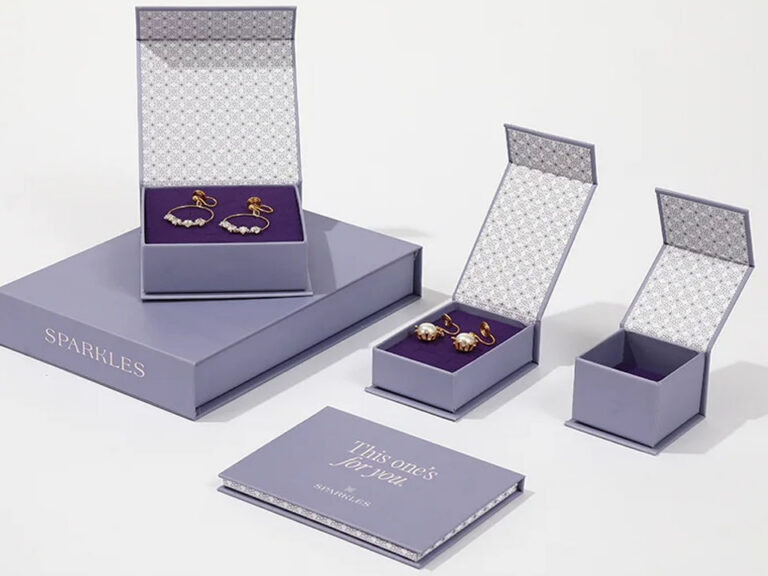
Magnetic boxes get attention.
Open one in a sourcing meeting, close the flap, hear that soft snap, and somebody usually says, “That feels expensive.”
Sometimes it does.
Sometimes the magnet is doing more work in the sales presentation than it will ever do for the actual customer.
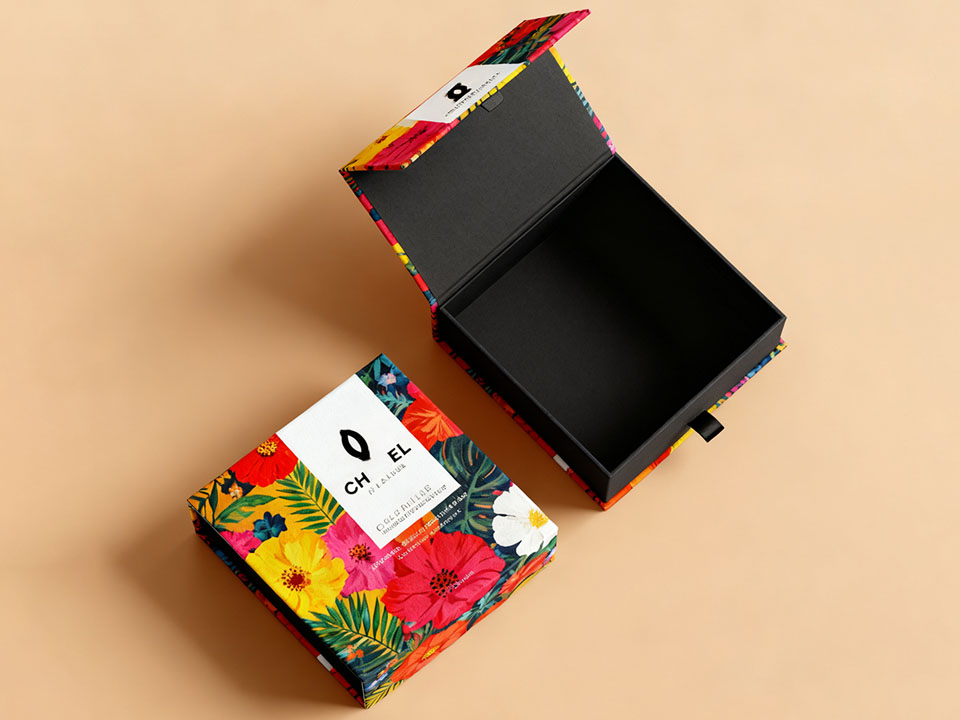
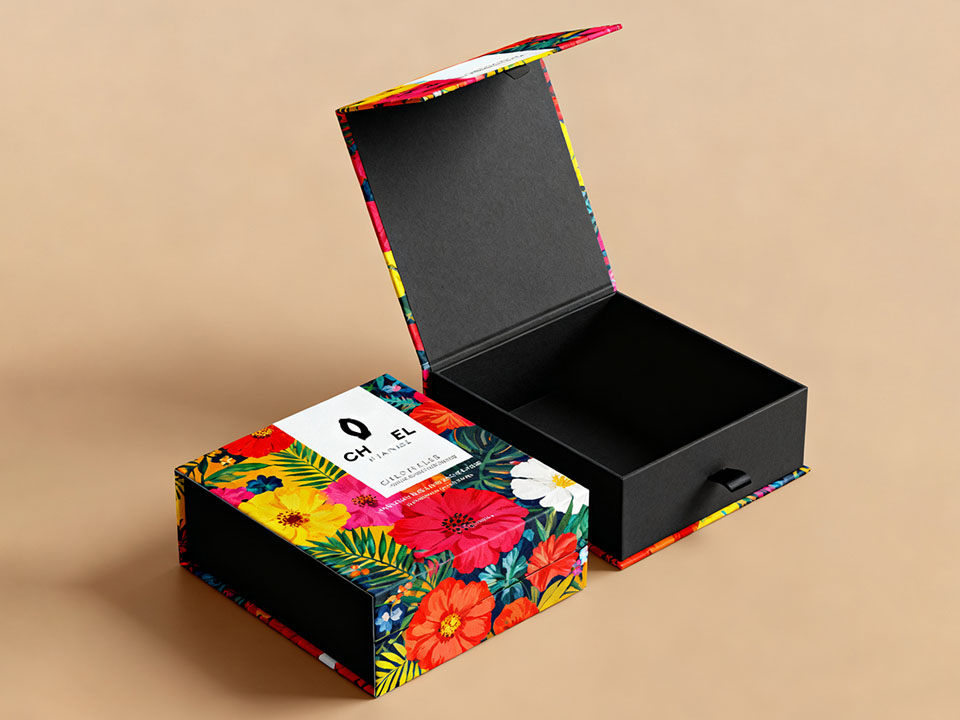
A typical magnetic rigid box uses a hinged rigid panel and concealed magnets positioned inside the wrapped board. The design creates a broad presentation surface and works particularly well for beauty sets, electronics, apparel kits, corporate gifts, influencer packages, and multi-component products.
Well-engineered magnetic closure rigid boxes can create an excellent presentation experience when the product actually benefits from the larger opening area.
But I think magnetic boxes are massively over-specified.
Brands often choose them because somebody has decided that magnets equal luxury.
They do not.
A badly engineered magnetic box with weak closure force, uneven gaps, misaligned panels, excessive empty space, or an awkward opening motion can feel cheaper than a beautifully executed two-piece box.
And magnets introduce variables.
The magnet position matters. Polarity matters. Board thickness matters. Hinge geometry matters. The opposing panel needs to meet at the intended location after wrapping, gluing, forming, and assembly.
Production tolerances start stacking up.
I recently came across a packaging-design discussion that captured this issue perfectly.
A buyer had purchased a premium-looking magnetic box and initially loved it. Visually, everything worked.
Then they put the actual product inside.
The fit was so tight that removing the product became frustrating. The magnetic opening was less intuitive than expected, and there was no obvious point showing the customer where to pull.
Someone unfamiliar with the structure could easily start forcing the wrong section of the box.
That is bad packaging engineering wrapped in expensive paper.
I have also seen printers and rigid-box manufacturers discuss how easily magnetic closures can become inconsistent when magnet positioning or panel alignment drifts during production.
That is why I tell buyers not to approve this kind of box from renderings alone.
Test the physical sample.
Open it.
Close it.
Give it to someone who has never seen it before.
Watch what they do without giving instructions.
Then ask whether the structure still feels premium.
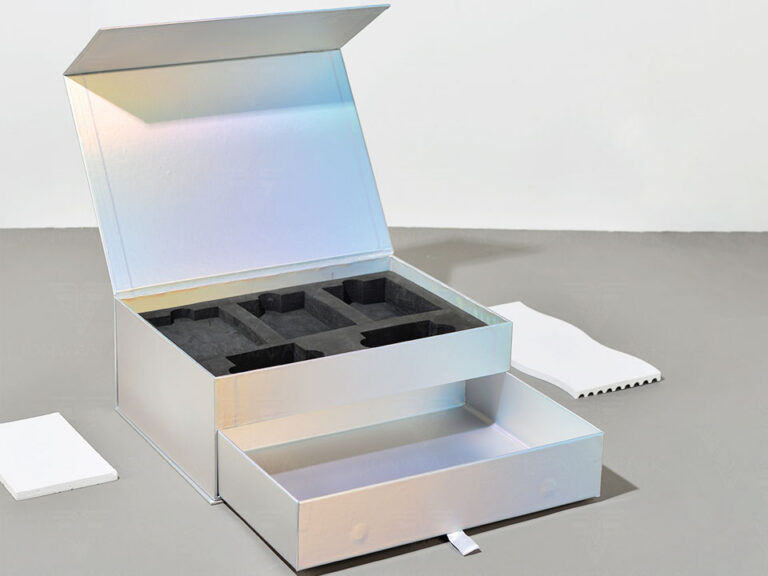
A drawer box changes the reveal sequence.
Instead of lifting a lid, the customer pulls an inner tray from an outer sleeve.
That extra movement creates anticipation.
This makes drawer rigid boxes particularly useful for candles, chocolate, watches, jewelry, small accessories, beauty products, electronics, and gift items where the reveal itself contributes to perceived value.
Ribbon pulls are common, but they are not mandatory.
Some projects use:
The key engineering issue is tray friction.
Too loose?
The drawer slides out when the customer picks up the package.
Too tight?
The customer pulls harder, suddenly releases the tray, and nearly launches the product across the room.
Not ideal.
Humidity, wrapping paper thickness, board tolerance, adhesives, sleeve deformation, and insert pressure can all affect the final sliding resistance.
That is why the mass-production material stack should match the approved sample as closely as possible.
Think about the opening sequence.
Outer sleeve.
Pull tab.
Movement.
Product appears gradually.
That little pause can be useful for premium products.
But do not add it just for theatre. If retail staff need to open and repack the box repeatedly, or if the customer needs immediate access, a simpler lid-and-base structure may perform better.
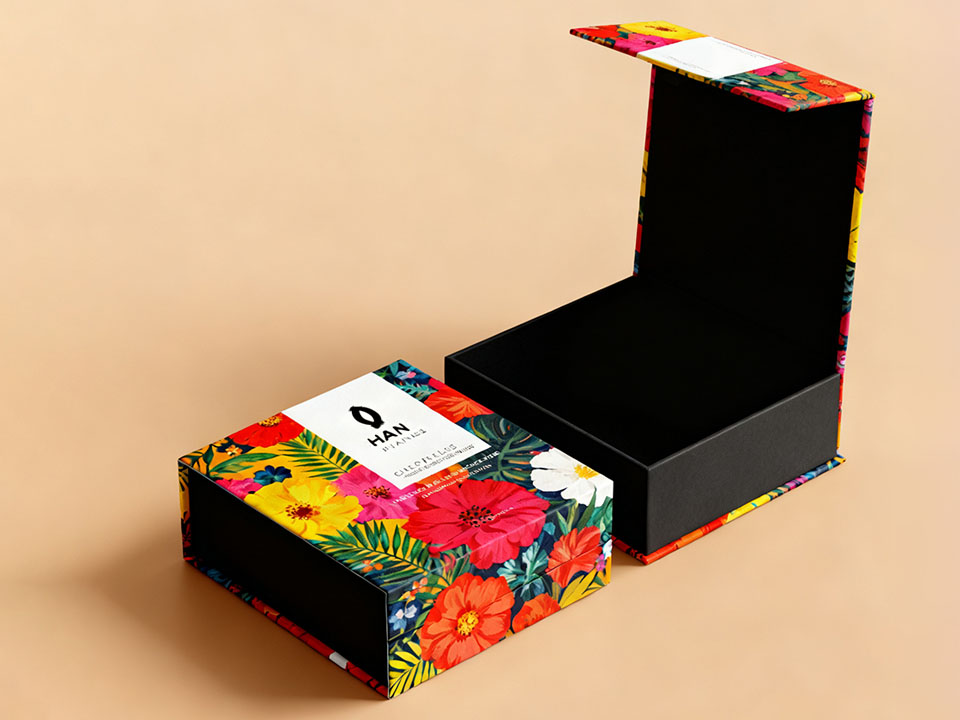
Shoulder-neck boxes are where structural precision becomes visually obvious.
The construction normally includes a lower base, an inner neck or shoulder projecting above it, and a lid that fits around that raised section.
When closed, the structure can create a visible line between the lid and base.
That line can become part of the design.
Use a contrasting neck color and suddenly the structure itself acts like decoration.
Black exterior. Gold neck.
White exterior. Red neck.
Textured paper outside. Bright printed shoulder inside.
No complicated graphics required.
High-quality shoulder neck rigid boxes are particularly appropriate for perfume, spirits, cosmetics, watches, chocolate, candles, premium accessories, and collectible products.
The inner neck also gives the box an architectural feel that two-piece boxes do not naturally have.
But tolerances matter again.
If the shoulder is too high, the proportions may look awkward.
If the clearance is too small, the lid can drag against the neck.
If the outer wrap and inner wrap create unexpected thickness, the finished dimensions may move enough to change the fit.
For this style, do not evaluate only the closed box.
Inspect the reveal when the lid comes off.
The shoulder is part of the presentation.
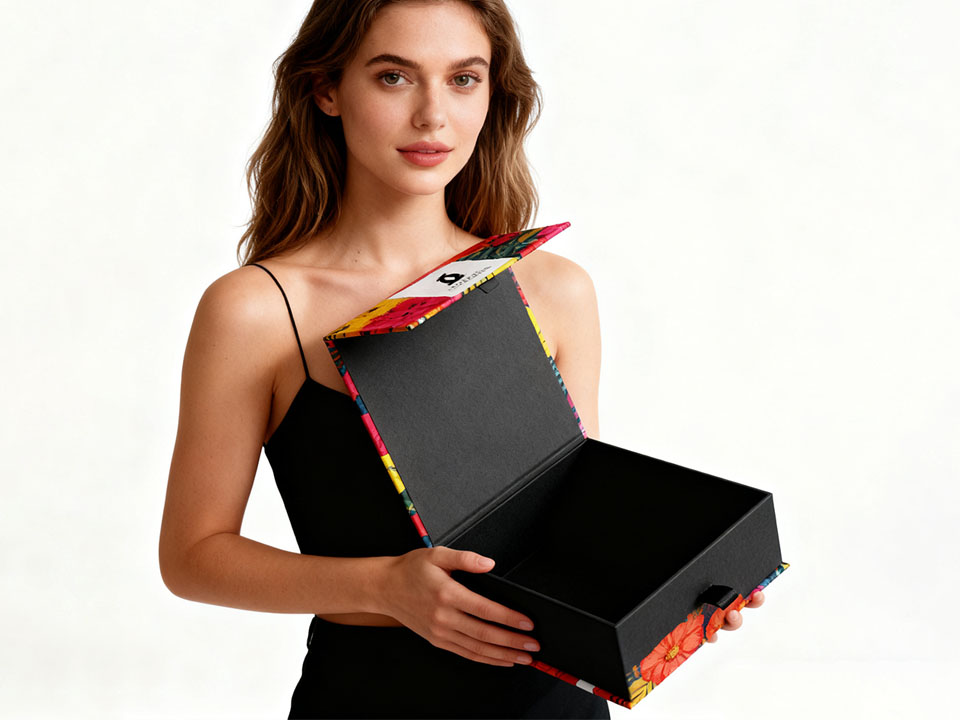
Book-style rigid boxes open horizontally around a hinged edge or spine.
The format creates a large printable surface and gives brands room to build a sequence.
Cover.
Inside lid.
Product presentation.
Insert.
Sometimes another compartment underneath.
That makes the structure useful for:
A magnetic closure can be added, but a book-style structure does not inherently need magnets. Ribbon ties, mechanical tabs, friction closures, and other systems can also work.
This distinction matters.
Book-style describes the opening architecture. Magnetic describes the closure mechanism.
They frequently appear together, which is why buyers sometimes treat them as the same thing.
They are not.
For larger gift programs, book-style packaging also creates a generous branding canvas. But that additional board area can increase material consumption and freight volume.
Measure the value of the presentation area before paying for it.
Traditional rigid boxes are usually supplied assembled.
That means you are shipping air.
A lot of it.
For local retail programs, that may not be a major issue. For containerized international shipping, warehouse-heavy programs, or large-format gift boxes, it can become very expensive.
Collapsible rigid boxes attack that problem.
The panels are engineered so the box can ship relatively flat and then be erected before packing.
Magnets, pressure-sensitive adhesive, locking corners, or other joining systems may be used depending on the design.
The business case is straightforward:
lower shipping and storage cube versus a conventional pre-assembled rigid box.
But there is a trade-off.
You are moving some complexity downstream.
Someone has to erect the box.
That might be your contract packer, warehouse, fulfillment partner, retail operation, or customer.
So do not compare only FOB unit prices.
Compare:
box price + freight + storage + assembly labor + packing speed + rejection rate.
A structure that costs more per box can still reduce the total landed packaging cost.
For global B2B sourcing, that distinction matters.
Once you move beyond standard structures, the list gets much longer.
Rigid board can be engineered into:
This is where packaging can become genuinely memorable.
It is also where things can get expensive quickly.
Every unusual panel, hinge, joint, wrap direction, insert layer, and closure adds another place where tolerance can stack.
That does not mean specialty structures are a bad idea.
It means they need a commercial reason to exist.
If the box is supporting a product launch, limited-edition collection, VIP program, press kit, or flagship SKU, an unusual opening architecture may deliver real value.
For a high-volume everyday SKU?
Maybe not.
Sometimes engineering discipline beats novelty.
Buyers often spend 80% of the meeting discussing the exterior and 20% discussing everything inside.
I would almost reverse that ratio.
A piece of luxury rigid box packaging works only when the outer structure and internal fitment operate as one system.
The insert determines:
A perfume bottle trapped inside an EVA insert is not premium.
Neither is a watch rattling around in an oversized cavity.
Neither is a candle that requires the customer to turn the entire box upside down to remove it.
The product needs enough retention to survive handling but enough clearance to be removed naturally.
That sounds obvious.
You would be surprised how often it gets missed.
I use six filters.
Measure the actual production product.
Not the CAD dimensions from six months ago.
Not the prototype that changed after tooling.
The real production SKU.
Record:
Then design outward from the product.
Ask one simple question:
How does the customer physically remove the product?
Lift it?
Pull a ribbon?
Grip two sides?
Slide it out?
Remove a secondary layer first?
If nobody can answer that question during structural design, sampling is going to teach you the answer later.
Usually at your expense.
Do not finalize the box and then squeeze an insert into the remaining space.
Insert thickness changes cavity dimensions.
Wall thickness changes product clearance.
Ribbon placement changes extraction.
Accessory compartments affect overall footprint.
Treat the packaging as one assembly.
A few millimeters can matter when multiplied by 10,000 boxes.
So can a magnetic flap that increases the footprint.
Run palletization and carton loading calculations early.
Ask for:
A beautiful packaging concept can look a lot less beautiful when the freight quote arrives.
A handmade white sample is useful for reviewing proportions.
It is not enough for approving mass production.
Whenever possible, evaluate a production-quality printed sample using the intended:
Then test the box with the actual product.
Not once.
Repeatedly.
Do not spend $3 solving a $0.30 packaging problem.
And do not save $0.20 if it creates a return, breakage, or usability problem worth ten times that amount.
The correct structure sits somewhere between engineering performance, brand positioning, manufacturing reality, and landed cost.
Not automatically.
A paper-based box can have recycling advantages, but recyclability depends on the complete material system—not simply whether the outside looks like paper.
Magnets, plastic laminations, foam inserts, metal components, adhesives, textile ribbons, and mixed-material decorations can complicate recovery.
This deserves attention because fiber recovery infrastructure is already substantial in key markets.
According to the European Paper Recycling Council figures reported by CEPI, 75.1% of paper and board consumed in Europe was recycled in 2024, with the industry targeting 76% by 2030.
For brands selling into Europe, that gives packaging teams another reason to question unnecessary material combinations.
If a simpler two-piece box with a paperboard insert meets the commercial requirement, adding magnets, foam, plastic lamination, and decorative hardware simply to make the pack “feel luxury” deserves a second look.
Premium packaging does not have to mean maximum material.
Sometimes restraint looks better anyway.
Before signing the golden sample, I would check at least these points:
This is where a lot of packaging problems disappear.
Not in the mood board.
Not in the 3D rendering.
In the sample room.
There is no single best rigid box.
A two-piece box can be the best choice for a candle.
A drawer box can be better for jewelry.
A shoulder-neck structure may suit a premium fragrance bottle.
A magnetic presentation box can make sense for a multi-product beauty kit.
A collapsible structure may beat all of them when freight and warehouse volume dominate the economics.
That is why I would never start a rigid-box project by asking:
“Which style looks the most luxurious?”
Start with:
What does the product need the packaging to do?
Then define the opening sequence, fit, insert, production tolerances, shipping method, assembly process, budget, and sustainability requirements.
Once those variables are clear, choosing between the different types of rigid boxes becomes much easier.
And usually cheaper.
Short answer: The main types are two-piece, magnetic closure, drawer, shoulder-neck, book-style, collapsible, and specialty rigid boxes.
The differences are mainly structural. Each style changes how the package opens, how the product is supported, how difficult the box is to manufacture, and how efficiently it can be stored and shipped.
Short answer: A two-piece lid-and-base box is generally one of the simplest and most versatile rigid box structures.
It uses a separate lid and base without requiring hinges or magnets. Good tolerances are still necessary, especially where the lid and base create the opening friction.
Short answer: Not necessarily. Magnets can improve the closing experience, but manufacturing quality matters more than the closure mechanism.
A poorly aligned magnetic box can feel cheap. A precisely manufactured two-piece or shoulder-neck box with excellent wrapping, fit, finishing, and insert design can deliver stronger premium perception.
Short answer: Drawer boxes work particularly well for jewelry, watches, chocolate, candles, cosmetics, electronics, and small premium accessories.
Their sliding tray creates a controlled product reveal. The main engineering consideration is maintaining consistent friction between the tray and outer sleeve.
Short answer: A shoulder-neck box uses a raised inner neck positioned between the base and lid.
The neck can provide structural support while creating a distinctive stepped reveal. Contrasting neck colors are frequently used to make the construction itself part of the visual design.
Short answer: Book-style refers to the opening structure, while magnetic describes one possible closure method.
A book-style box opens around a hinged spine like a hardcover book. It may use magnets, ribbons, tabs, or another closure system depending on the design.
Short answer: Yes. They can substantially reduce shipping and warehouse volume because the boxes travel flat or partially flat.
However, buyers should include assembly labor and packing speed when calculating total cost. Lower freight volume does not automatically mean lower total packaging cost.
Short answer: The best luxury rigid box is the structure that matches the product, presentation, insert, logistics, and budget.
Magnetic boxes are only one option. Two-piece, drawer, and shoulder-neck structures can feel equally premium—or better—when their proportions, materials, fit, and finishing are well executed.
Short answer: Yes. A physical production-quality sample should be tested with the actual product whenever possible.
Check product clearance, extraction, insert retention, tray friction, lid resistance, magnet alignment, hinge movement, visual gaps, and the complete opening sequence before approving mass production.
Comments