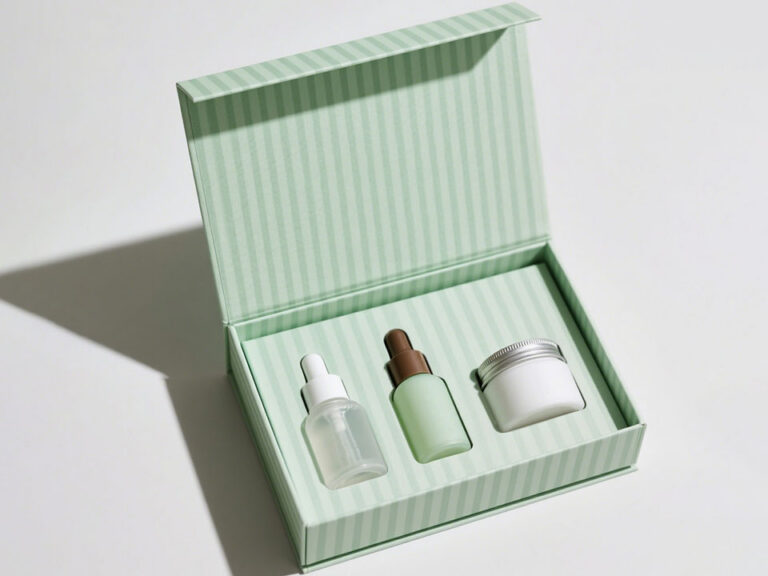
Share your packaging requirements before you leave. Our experts can review your dieline, artwork, materials, inserts, finishing, certifications, MOQ, quality checks, and delivery expectations.
The Complete and Step By Step Guide to Perfume Packaging
Perfume packaging gets judged first.
Always.
We have watched it happen in stores, in sample rooms, in buying meetings, and on packing lines. Someone picks up the box. They feel the paper. They test the lid. They check the weight. Maybe they turn it once in the hand.
Then they decide.
Not after the first spray.
Before it.
That is the strange pressure of fragrance packaging. You sell something invisible, so the box has to make the scent feel real before the customer smells anything. Warm. Clean. Dark. Fresh. Powdery. Expensive. Playful. Serious. Whatever the juice promises, the package starts the conversation.
Statista’s 2026 fragrance outlook projects that the global fragrance market will generate more than $64 billion in revenue in 2026. See Statista’s 2026 Fragrances outlook.
Crowded market.
Crowded shelf.
Crowded feed.
So no, perfume packaging does not sit quietly in the background.
It works.
What Perfume Packaging Actually Includes
Look, perfume packaging is not just the pretty box.
That box matters. A lot. But it does not work alone.
In our experience, perfume packaging usually breaks into three layers.
Packaging Layer
What It Does
Common Materials
Where Brands Get It Wrong
Primary packaging
Holds the fragrance liquid
Glass bottle, spray pump, cap, collar, label
Beautiful bottle, weak spray hardware, loose cap
Secondary packaging
Presents and protects the bottle
Folding carton, rigid box, drawer box, magnetic box, inserts
Retail box is expected to survive courier abuse alone
Most buyers notice the secondary packaging first.
Your operations team watches all three.
And both sides are right.
The outer perfume box has to look correct for the price point. The insert has to hold the bottle without friction, wobble, or awkward removal. The shipper has to survive the rough part nobody photographs.
We have noticed one mistake more than almost any other: brands obsess over the front panel and forget the bottle can move inside the box.
Bad move.
That little rattle becomes scuffing.
Scuffing becomes returns.
Returns become a margin problem.
Why Perfume Packaging Matters More Than Most Brands Admit
A scent cannot stand on a shelf and explain itself.
The box does that job.
It turns “rose oud” into paper, foil, color, shadow, and weight. It turns “fresh linen” into space, typography, and restraint. It turns “smoked vanilla” into warmth, depth, and maybe a little metallic detail if the brand can pull it off.
Tiny choices carry meaning.
A matte ivory box tells one story.
A black rigid box with crisp foil tells another.
A kraft sleeve with blind debossing says something else entirely.
Customers do not analyze it like packaging engineers.
They just react.
Too shiny.
Too thin.
Too flat.
Too loud.
Or, better: this feels right.
That reaction sells.
Start With the Fragrance Positioning, Not the Box Shape
We see brands jump too fast.
“We want a drawer box.”
Maybe you do.
Maybe you do not.
A drawer box can look fantastic. So can a magnetic closure box. So can a simple two-piece rigid box. But structure should follow the fragrance, the channel, the buyer, and the price point.
Not a screenshot.
Ask better questions first:
Is this perfume mass, masstige, premium, or luxury?
Will the buyer use it daily, gift it, collect it, travel with it, or display it?
Should the fragrance feel clean, sensual, bold, nostalgic, botanical, clinical, artistic, or playful?
Is the bottle heavy, tall, wide, round, square, refillable, or oddly shaped?
Will the product sell in retail, online, subscription kits, duty-free, boutiques, salons, or gift sets?
Does the brand need quiet confidence or loud shelf impact?
That work comes first.
A light body mist and a $280 niche extrait should not wear the same box style. They may both smell great. They need different packaging logic.
The Main Elements of High-Performing Perfume Packaging Design
1. Structure
Structure does the heavy lifting.
Box shape. Opening style. Wall thickness. Insert fit. Lid tension. Closure. Bottle support.
People sometimes treat these things like factory details.
They are not.
Perfume bottles often use glass. Many bottles carry thick bases, heavy caps, metal sprayers, collars, and more filled weight than the design team expects. The box needs to handle that weight without bowing, splitting, crushing, or letting the bottle knock around.
For entry-level retail, a folding carton may work well.
For premium and luxury fragrance, rigid paperboard usually feels better. It gives the box weight, clean edges, stronger presentation, and a slower opening moment.
That pause matters.
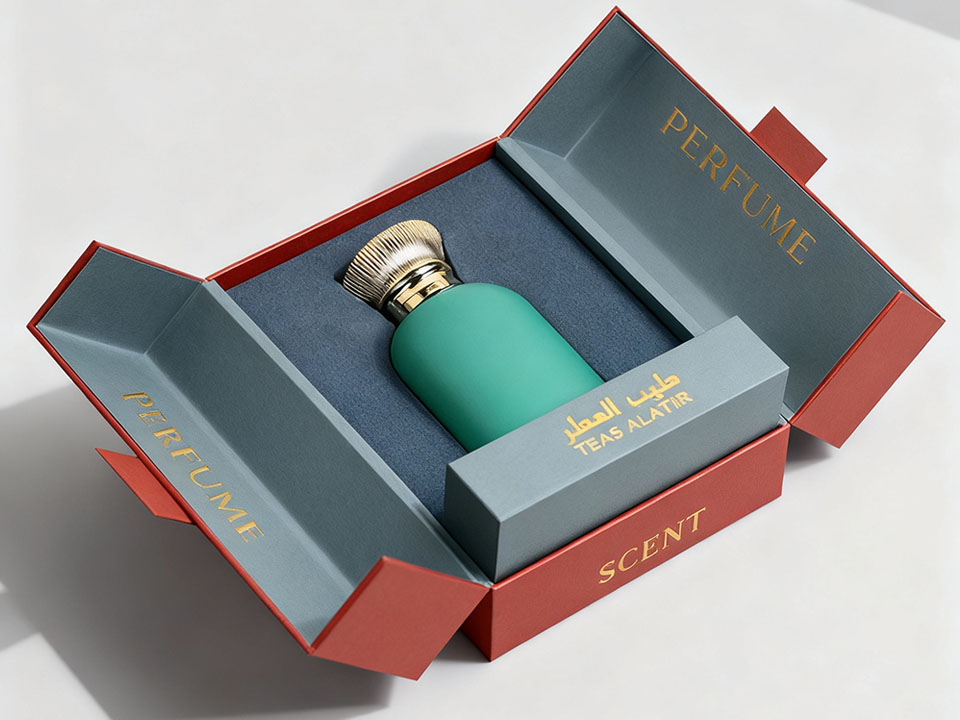
When the bottle, insert, print finish, and brand story all need to work together, custom perfume boxes usually make more sense than a stock structure.
Stock can work.
Custom works when details matter.
And in fragrance, details usually decide the sale.
2. Materials
Material choice changes almost everything.
Cost.
Feel.
Print quality.
Sustainability.
Shelf presence.
Shipping weight.
Durability.
No small thing.
Material
Best For
Strengths
Watchouts
SBS paperboard
Folding cartons, clean cosmetics look
Smooth print surface, bright white base
Less premium than rigid board
Rigid greyboard
Luxury perfume boxes
Strong, weighty, premium hand-feel
Higher unit cost and freight weight
Kraft paperboard
Natural, eco-minded fragrance lines
Rustic look, recyclable appeal
Color printing appears muted
Corrugated board
DTC shipping and outer cartons
Better transit protection
Not always retail-polished
Molded pulp insert
Sustainable bottle holding
Plastic-free perception, shaped support
Tooling and fit must be accurate
Paperboard insert
Retail and gift sets
Print-friendly, cost-effective
Needs proper scoring and locking
EVA or foam insert
Heavy glass or luxury sets
Strong cushioning, neat presentation
Sustainability concerns unless specified
Now sustainability.
We need to talk about it plainly.
McKinsey’s 2025 global packaging research found that paper and cardboard, along with glass, ranked within the top three perceived sustainable packaging types across every surveyed country. The same research found that recyclability ranked as the top sustainability trait across markets. See McKinsey’s 2025 global packaging survey.
Does paper solve every problem?
No.
It just gives customers a signal they understand quickly. That counts.
3. Typography
Typography can make a perfume box feel expensive in one glance.
It can also ruin the whole thing.
Fast.
We like expressive type. We really do. But perfume packaging has to work at real size, under real lighting, on a real shelf, in a real person’s hand.
So we keep a few rules close:
Use one display typeface for personality.
Use one clean supporting typeface for ingredients, size, concentration, and required copy.
Do not let decorative lettering wreck readability.
Match type weight to the scent character.
Test the font on the actual box size, not on a giant screen.
A thin serif can look elegant in a mockup and disappear on a 30 ml carton.
A bold sans serif can feel confident on a smoky amber fragrance and heavy-handed on a transparent floral.
Context decides.
Always.
4. Color
Color talks fast.
Sometimes too fast.
Black can suggest luxury, mystery, leather, oud, tobacco, night, or formal gifting.
White can suggest softness, cleanliness, skin scents, florals, purity, or modern minimalism.
Green can point toward botanical, herbal, refillable, earthy, sustainable, or gender-neutral fragrance.
Gold and champagne tones can bring warmth, celebration, gifting, and premium cues.
But let’s be real.
Not every fragrance needs black and gold.
A bitter citrus scent might look brilliant in sharp orange. A powdery iris extrait may not. A marine fragrance may need pale blue, or it may need no blue at all if the brand wants to avoid the obvious route.
Color should serve the scent.
Not the trend board.
5. Finishes
Finishes add touch.
They also tempt brands into bad decisions.
We have all seen the sample box that tries to do everything at once: foil, embossing, debossing, spot UV, metallic ink, soft touch, glitter, texture, and a ribbon.
Too much.
The best options include:
Foil stamping for logos, fragrance names, borders, seals, and small accents
Embossing to raise logos, monograms, patterns, or decorative frames
Debossing for a quieter pressed-in effect
Spot UV for shine contrast on matte surfaces
Soft-touch lamination for a smooth, premium feel
Textured paper for a more editorial or niche look
Metallic ink when foil feels too expensive or too loud
One finish executed cleanly can carry the whole box.
Five finishes can make the box look nervous.
Harsh?
Maybe.
Still true.
6. Inserts
The insert handles the unglamorous work.
It holds the bottle. It protects the sprayer. It supports the base. It frames the reveal. It keeps glass from moving when the package gets handled, packed, shipped, dropped, stacked, and opened.
Basically, the insert saves everyone later.
Insert Type
Best Use
Why It Works
Folded paperboard insert
Standard perfume boxes
Good cost-to-protection balance
Molded pulp tray
Sustainable fragrance lines
Plastic-free look and shaped support
EVA/foam insert
Luxury or heavy glass bottles
Cushions well and presents cleanly
Cardboard dividers
Gift sets or discovery kits
Keeps bottles from touching
Neck-lock insert
Tall or narrow bottles
Stops bottle wobble near the sprayer
Please test the insert.
Not with an empty bottle only.
Use a filled bottle. Use the real cap. Use the real sprayer. Shake the full pack-out. Drop-test it. Let the packing team handle it.
A bottle that shifts a little in the sample room can shift a lot in transit.
Tiny gap.
Big problem.
Popular Types of Perfume Packaging Boxes
Folding Carton Perfume Boxes
The folding carton is the workhorse.
Light. Printable. Cost-efficient. Scalable.
It works well for:
Mass-market perfume
Body sprays
Discovery sizes
Travel sprays
Retail shelf products
Promotional launches
A folding carton does not automatically look cheap.
Bad folding cartons look cheap.
Good ones look sharp, clean, and commercial. The difference usually comes down to paper grade, print control, dieline strength, and finishing discipline.
For luxury fragrance, though, a standard folding carton may feel too light unless every detail carries real quality.
Rigid Perfume Boxes
Rigid boxes often carry premium and luxury fragrance better.
They feel solid. They hold shape. They photograph well. They slow the opening down in a good way.
That matters.
Rigid boxes work especially well for:
High-end perfume
Gift sets
Limited editions
Influencer mailers
Niche fragrance launches
Retail display sets
They cost more.
Of course.
But they can make a fragrance feel more believable at a higher price point. If the bottle, scent, and retail strategy support the spend, rigid packaging can pay back through perceived value.
We have seen that happen plenty of times.
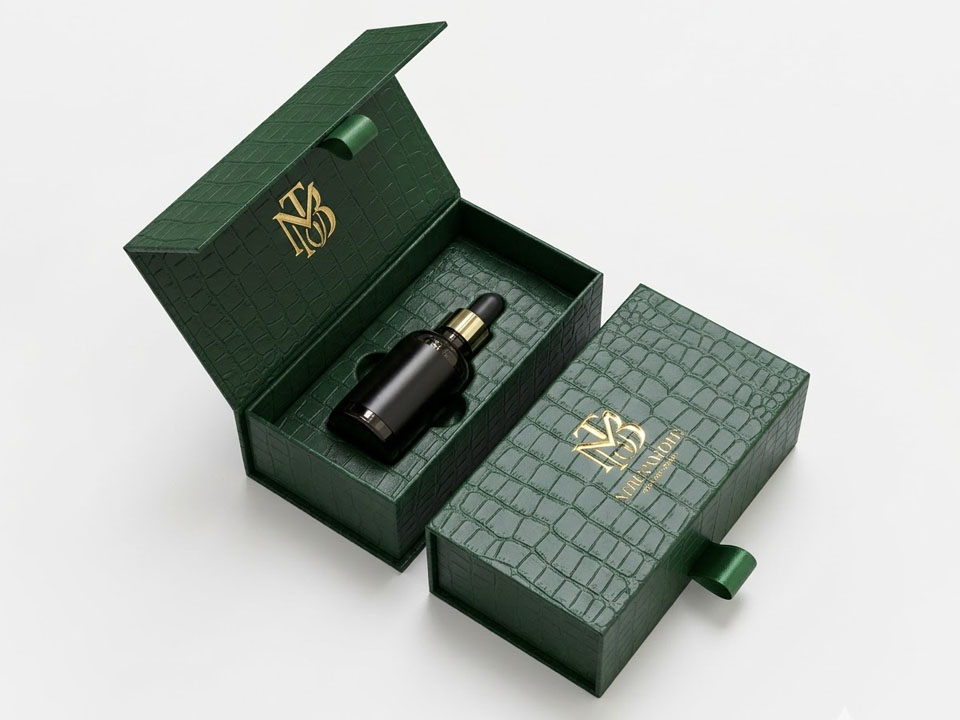
Magnetic Closure Perfume Boxes
A good magnetic closure gives a satisfying snap.
Not loud.
Just enough.
For fragrance brands that want a polished open-and-close moment, magnetic closure boxes can work beautifully.
They feel gift-ready. They also encourage customers to keep the box, especially for sets, minis, or premium discovery kits.
Use them for:
Luxury perfume gift sets
PR kits
Holiday collections
Discovery sets with premium positioning
Collector editions
One warning.
Magnets add cost, and they can affect recyclability depending on local sorting systems. If sustainability sits near the center of the brand, ask the supplier how the magnetic components fit into the overall material story.
Ask early.
Not after artwork approval.
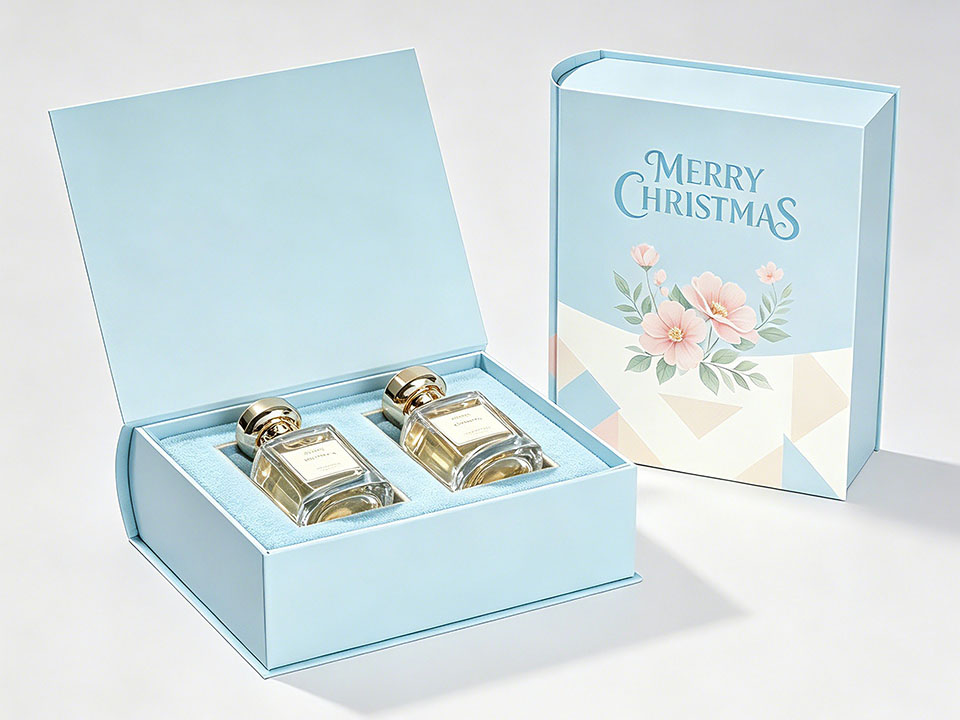
Double Door Rigid Perfume Boxes
Some fragrances need a reveal.
Not shouting.
A reveal.
That is where double door rigid boxes make sense. They open like a small cabinet or presentation case, so the product gets a little ceremony.
This structure works beautifully for:
Two-bottle fragrance sets
His-and-hers perfume collections
Luxury launch kits
Influencer gifting
Anniversary editions
High-value retail displays
We would not put every perfume in a double door rigid box.
Too much cost. Too much material. Too much structure for a simple SKU.
But for the right launch, it lands.
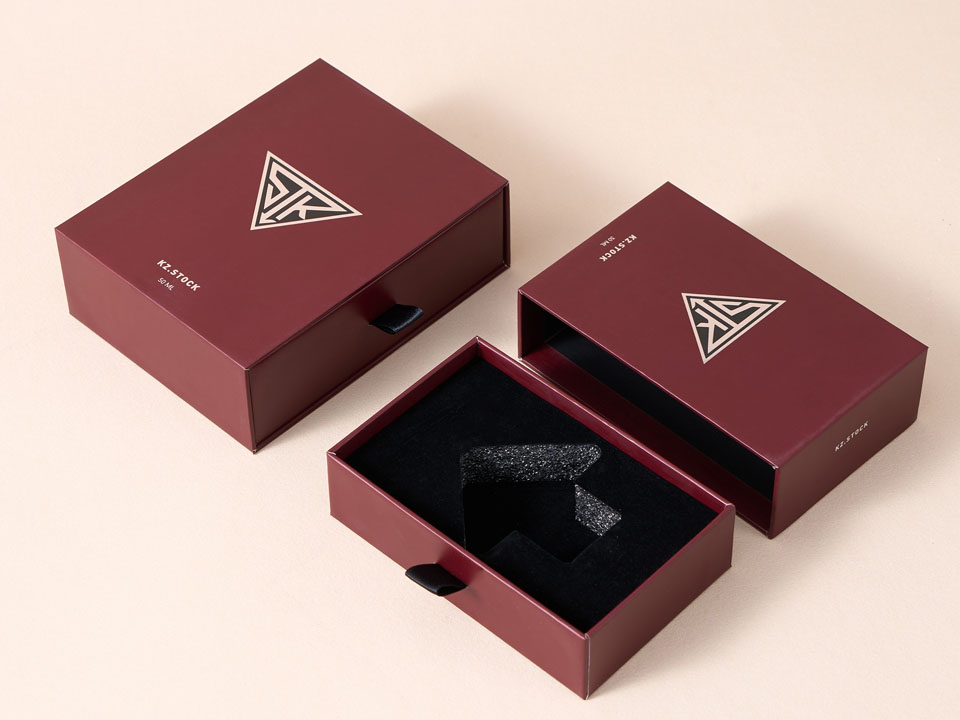
Paper Drawer Perfume Boxes
Drawer boxes feel neat.
Controlled.
Almost ritualistic.
The sleeve and sliding tray create a slower opening. That makes paper drawer boxes a strong fit for discovery sets, travel sizes, and small fragrance collections.
They also help when the insert needs to hold several small bottles in a clean row.
Pull.
Pause.
Reveal.
That rhythm suits perfume.
Lid Lift-Off Perfume Boxes
A two-piece box still works because people understand it instantly.
No instructions needed.
lid lift-off boxes give perfume brands a sturdy, familiar structure that can look classic, modern, minimal, or ornate depending on paper, color, foil, and insert design.
Use them for:
Boutique perfume launches
Premium single-bottle packaging
Gift packaging
Minimalist fragrance brands
Heavy glass bottles that need a strong base
The trick sits in the lid fit.
Too loose feels cheap.
Too tight annoys people.
The right fit gives a controlled slide and a clean reveal. Small thing. Big difference.
Perfume Packaging Design by Brand Position
For Mass-Market Perfume
Keep it clear.
Not boring.
Clear.
Mass-market fragrance packaging has to work quickly. Shoppers need to understand the scent family, brand, size, and basic mood without studying the box like a museum label.
Use folding cartons, strong shelf color, readable naming, and simple finish choices that protect margin.
Customers should know quickly whether the fragrance feels fresh, floral, woody, sweet, spicy, sporty, or clean.
Premium perfume packaging should feel expensive without feeling wasteful.
That balance matters more now.
People still love a beautiful box. They also notice excess. We have noticed buyers ask smarter questions about materials, refill options, and unnecessary plastic. Brands should prepare for that.
For Luxury Perfume
Luxury packaging usually does less.
But it does less better.
Fewer colors. Better paper. Cleaner edges. Sharper typography. More precise foil. Better lid tension. Stronger insert design.
Luxury buyers notice quiet mistakes.
Glue marks.
Fuzzy foil.
Weak corners.
Loose inserts.
Scuffed paper.
A lid that drops too fast.
A bottle that rattles.
Those details either support the price or expose it.
We have seen eccentric packaging that felt brilliant, and we have seen eccentric packaging that felt unfinished. The difference comes down to intention. The bottle still needs protection. The buyer still needs orientation. The story still needs clarity.
The best indie packaging feels personal, not sloppy.
Sustainable Perfume Packaging in 2026
A leaf icon does not make packaging sustainable.
Let’s be real.
Customers have seen too many vague green claims. They want clearer signals, and many of them now act on those preferences.
Shorr’s 2025 Sustainable Packaging Consumer Report found that 54% of surveyed U.S. consumers had deliberately chosen products with sustainable packaging in the previous six months. The same report found that 90% said they were more likely to buy from a brand or retailer using eco-friendly packaging. See Shorr’s 2025 Sustainable Packaging Consumer Report.
For perfume packaging, sustainable choices can include:
FSC-certified paperboard
Recycled paper content
Plastic-free inserts
Molded pulp trays
Soy-based or water-based inks
Water-based coatings
Minimal lamination
Mono-material paper structures
Refillable bottle systems
Reduced box volume
Clear disposal instructions
QR codes for recycling guidance by market
But claims need proof.
Better claims:
“Made with FSC-certified paper”
“Plastic-free paperboard insert”
“Designed for refill use”
“Printed with soy-based ink”
“Uses recycled paper content”
“No foam insert”
Weak claims:
“Green packaging”
“Earth-safe”
“Planet-friendly”
“100% sustainable”
Those lines may sound fine in a meeting.
They sound weaker when a buyer asks, “Can you prove that?”
Use specifics.
Specifics build trust.
How to Choose the Right Perfume Packaging Structure
Start with the product.
Then the channel.
Then the price.
Then the margin.
Then the unboxing moment.
In that order.
Brand Need
Best Box Style
Why
Low-cost retail launch
Folding carton
Affordable, printable, scalable
Premium single bottle
Rigid box or lid lift-off box
Better weight and presentation
Luxury gift set
Magnetic closure box
Strong opening experience
Two-bottle set
Double door rigid box
Balanced reveal and premium feel
Discovery kit
Paper drawer box
Easy tray layout for multiple vials
DTC shipping
Retail box plus corrugated shipper
Better transit protection
Sustainable niche launch
Kraft rigid box or paperboard carton
Natural look and clearer disposal story
Influencer PR kit
Magnetic or double door rigid box
More visual impact on camera
The weak approach sounds like this: “We saw a box online and want that.”
The better approach sounds like this: “Here is the bottle weight, channel, price point, buyer, insert need, sustainability goal, and launch quantity.”
That second version leads to better packaging.
Every time.
Perfume Packaging for E-Commerce
E-commerce can be brutal.
A retail shelf behaves politely.
A delivery network does not.
Your package may get tossed, stacked, squeezed, scanned, dropped, rerouted, and jammed next to a box of shoes. The pretty retail box cannot carry that burden alone.
So we think in layers:
Bottle closure must stay secure.
Bottle must not move inside the retail box.
Retail box must not move inside the shipper.
Shipper must handle compression and drops.
Labels and markings must follow carrier rules for liquids and fragrance products.
And yes, fragrance shipping can involve rules depending on alcohol content, carrier, country, and transport method.
Do not guess.
Check current carrier rules before shipping at scale, especially for alcohol-based perfumes.
A beautiful box that arrives damaged still fails.
Simple as that.
What Should Be Printed on Perfume Packaging?
The front panel sells.
The side and back panels explain.
That split keeps the box clean and useful.
Common perfume box content includes:
Brand name
Fragrance name
Concentration: parfum, eau de parfum, eau de toilette, eau de cologne
Bottle volume: 30 ml, 50 ml, 100 ml, etc.
Scent family or short description
Ingredient list where required
Manufacturer or distributor details
Batch code
Barcode
Country of origin
Warnings or usage statements where required
Recycling or disposal marks
Certification marks when valid
QR code for refill, authentication, or brand story
Do not cram everything onto the front.
Give the customer the emotional cue first. Then give the practical details where they belong.
A perfume box should feel calm, not crowded.
Perfume Packaging Trends Worth Watching in 2026
Quiet Luxury Packaging
Less noise.
Better materials.
We keep seeing matte paper, blind debossing, soft neutrals, warm whites, deep browns, charcoal, and restrained foil. Not flashy. Not dull either.
Just controlled.
The box whispers because the brand can afford not to shout.
Refill-Ready Systems
Refillable fragrance no longer feels like a side project.
More brands now treat refills as part of the main product experience. Packaging has to explain the refill process clearly without making the customer work too hard.
Use inserts, QR codes, icons, and side-panel copy to make refilling feel obvious.
If people feel confused, they will not refill.
They will just buy something else.
Gender-Neutral Visual Codes
Many fragrance brands now avoid rigid “for him” and “for her” packaging.
We see more:
Cleaner typography
Less gender-coded color
More material-led design
Neutral palettes
Scent-family storytelling instead of identity labels
This does not mean bland.
It means the scent leads.
And honestly, that feels overdue.
Tactile Paper
Texture sells quietly.
Linen paper. Uncoated stock. Embossed grain. Molded pulp. Raw paper edges.
These details can make a box feel crafted without adding loud graphics. For fragrance, touch carries real weight because the product already lives in the senses.
Smell comes later.
Touch comes first.
Smaller Discovery Sets
Customers want to try before they commit.
Fair.
That creates demand for packaging that can hold 2 ml, 5 ml, 10 ml, and travel-size formats neatly. Drawer boxes, sleeve trays, and rigid sampler kits fit that behavior well.
The challenge?
Small must not feel cheap.
A discovery set should feel like an invitation, not a leftover sample pack.
Packaging That Photographs Well
Social media still matters.
But loud, shiny, overdone packaging feels tired.
Good fragrance packaging now needs to look clean under natural light, sit well in hand, and create a simple opening moment people can record without staging a full production.
A good box does not beg for attention.
It gives people something worth noticing.
Common Perfume Packaging Mistakes
Mistake 1: Designing Around the Artwork Only
Artwork is not packaging.
The dieline, insert, bottle fit, paper grain, coating, fold lines, and closure all matter.
A beautiful print file can still turn into a weak box.
We have seen it.
Everyone has seen it.
Mistake 2: Using Too Many Finishes
Foil, emboss, deboss, spot UV, glitter, metallic ink, and soft touch on one box?
Please do not.
Pick the finish that supports the brand mood. Execute it cleanly. Stop there.
Confidence usually looks simpler than insecurity.
Mistake 3: Ignoring Bottle Weight
Perfume bottles can feel surprisingly heavy.
Especially with thick glass and a decorative cap.
If the board is too thin or the insert is weak, the box starts to bow, split, or feel unstable. The buyer may not know the technical reason.
They will still feel the problem.
Mistake 4: Treating Sustainability as a Decoration
A green icon does not do the work.
Material selection does.
Recyclability does.
Recycled content does.
Refill systems do.
Reduced waste does.
Clear claims do.
If sustainability matters to the brand, build it into the structure. Do not paste it onto the artwork at the end.
Mistake 5: Forgetting the Unboxing Sequence
Opening order matters.
What does the customer see first?
The logo?
The bottle cap?
A message?
A tray?
A sample?
A refill card?
Design that sequence.
Do not leave it to chance. Fragrance should feel considered from the first touch to the first spray.
Step-By-Step Perfume Packaging Development Process
Step 1: Define the Brand and Fragrance Story
Start with a real brief.
Not a vague mood board.
Not ten screenshots from luxury brands with completely different price points.
A real brief.
Include:
Brand personality
Target buyer
Price point
Scent family
Competitor set
Sales channel
Sustainability goals
Required claims
Launch quantity
Timeline
This keeps the project from turning into a taste argument.
And packaging projects can become taste arguments very quickly.
Step 2: Measure the Bottle Properly
Measure everything.
Height
Width
Depth
Diameter
Cap height
Shoulder shape
Filled weight
Sprayer sensitivity
Label placement
Tolerance range
Then allow room for insert grip, board thickness, and production variance.
Tight feels good.
Too tight creates problems.
A rendering may look perfect. A real filled bottle may tell a different story.
Listen to the bottle.
Step 3: Choose the Box Style
Now choose the structure.
A discovery set may need a drawer.
A luxury gift set may need a magnetic closure.
A minimalist niche fragrance may need a lid lift-off rigid box.
A mainstream retail launch may need a folding carton.
There is no universal best perfume box.
Only the right box for this bottle, this buyer, this channel, and this margin.
Step 4: Build the Insert
The insert should hold the bottle firmly without making removal annoying.
Test it with:
Filled bottles
Empty bottles
Real caps
Real sprayers
Real shipping movement
Real packing staff
That last one matters more than brands expect.
If the packing team struggles with the insert, production slows down. If removal feels awkward, the customer notices. If the bottle shifts, transit damage shows up later.
The insert has to satisfy everyone.
Hard job.
Important job.
Step 5: Design the Graphics
Now bring in typography, color, pattern, icons, barcode placement, fragrance copy, and required information.
Build a clear hierarchy:
Brand
Fragrance name
Concentration
Size
Supporting story
Technical details
Do not make customers hunt for the basics.
They will not admire the mystery.
They will move on.
Step 6: Select Finishes
Choose finishes based on mood and budget.
A few pairings we like:
Soft-touch plus deboss for quiet luxury
Kraft stock plus black ink for natural fragrance
White rigid box plus gold foil for bridal gifting
Black paper plus blind emboss for niche evening scents
Uncoated paper plus spot color for indie brands
Review finish samples in real light.
Office lights lie.
Mockups lie harder.
A finish that looks perfect on screen may feel flat, sticky, too shiny, or too fragile in hand.
Step 7: Prototype
Get a physical sample.
No shortcut.
Check:
Bottle fit
Insert grip
Lid friction
Edge quality
Print alignment
Foil sharpness
Glue marks
Scuff resistance
Opening feel
Barcode scan
Transit performance
A prototype catches problems while they still cost less to fix.
That is the point.
Skipping it rarely saves money.
It just moves the cost later.
Step 8: Test Shipping and Handling
Do not assume the retail box can survive courier shipping alone.
Run basic drop, shake, compression, and pack-out checks. For regulated shipments, confirm current rules with your carrier and compliance partner.
Perfume packaging has to look beautiful after the ugly part of logistics.
That is the real test.
Step 9: Approve Production
Before production, lock every detail.
Dieline
Board grade
Paper wrap
Insert material
Pantone or CMYK values
Coating
Foil color
Emboss or deboss depth
Glue method
Quantity
QC standards
Carton packing method
Small changes at this stage can create big differences.
Sometimes expensive ones.
So slow down here.
Step 10: Review the First Production Run
Inspect the first batch before scaling.
Not one perfect sample.
Multiple cartons.
Look for color shifts, crushed corners, insert variance, foil breaks, lid-fit issues, scuffs, and glue marks.
Then refine.
Packaging improves when brands treat it like a product system, not a one-time purchase order.
Quick FAQ: Perfume Packaging
What is the best packaging for perfume?
For mass-market perfume, folding cartons often work well. For premium or luxury perfume, rigid boxes with custom inserts usually offer stronger presentation and protection. The best choice depends on bottle weight, price point, channel, and brand positioning.
What is primary packaging for perfume?
The bottle, sprayer, cap, collar, and any label directly attached to the bottle make up primary packaging. The box around the bottle serves as secondary packaging.
What materials are used for perfume boxes?
Common materials include SBS paperboard, rigid greyboard, kraft paperboard, corrugated board, textured paper, molded pulp inserts, paperboard inserts, and specialty coatings or foils.
How do you make perfume packaging look expensive?
Use stronger structure, better paper, restrained typography, precise foil or embossing, clean inserts, and tight production tolerances. Expensive-looking packaging usually comes from control, not clutter.
Is sustainable perfume packaging possible?
Yes. Use recyclable paperboard, recycled content, plastic-free inserts, FSC-certified materials, refill-friendly formats, and clear disposal instructions. Avoid broad claims unless you can prove them.
How do you package perfume for shipping?
Use a secure bottle closure, an insert that stops movement, a strong retail box, cushioning, and a suitable outer shipper. Check carrier rules before shipping alcohol-based fragrance, especially across borders.
The Packaging Choice That Pays Off
The best perfume packaging does not shout.
It reassures.
It tells the buyer, “You chose well.”
That is the job.
Protect the bottle. Support the price. Match the scent. Photograph cleanly. Ship safely. Give the customer a small moment they remember.
Start with the fragrance story.
Engineer around the bottle.
Then make every material, finish, insert, and opening motion earn its place.
That is how perfume packaging becomes more than a box.