
Regulations for Child-Resistant Packaging (US/ EU)
This blog details child-resistant packaging (CRP) regulations in the US and EU, covering the PPPA and CLP, design standards, and compliance enforcement.

Summary
Child-resistant packaging (CRP) regulations are vital for protecting children from hazardous substances, aiming to minimize the risk of accidental ingestion or exposure. In both the United States and the European Union, these regulations dictate specific requirements for packaging deemed to be child-resistant, ensuring that it is difficult for children under five years old to open while remaining accessible to adults. The significance of these regulations is underscored by the potential dangers associated with various household products, which can lead to serious injuries or fatalities among young children if not properly contained.
In the United States, the Poison Prevention Packaging Act (PPPA) of 1970 established the framework for child-resistant packaging, which is overseen by the U.S. Consumer Product Safety Commission (CPSC). This legislation mandates that approximately 30 categories of products, including medications and household chemicals, utilize packaging that meets stringent child-resistance standards. Manufacturers must comply with these requirements and obtain a General Certificate of Conformity (GCC) to verify adherence to the established guidelines, which include rigorous testing protocols to assess the effectiveness of CRP designs.
Conversely, regulations in the European Union are influenced by various directives, including the Classification, Labeling and Packaging (CLP) Regulation, which requires child-resistant features for hazardous substances. Compliance is enforced through inspections by regulatory bodies such as the European Chemicals Agency (ECHA), and non-compliance can lead to significant penalties. While both regions prioritize child safety, differences in regulatory structures and compliance requirements create distinct challenges for manufacturers operating in these markets.
Notable controversies surrounding CRP regulations often revolve around the balance between child safety and adult accessibility, particularly for seniors and individuals with disabilities. Critics argue that packaging designed to be child-resistant can sometimes be overly complex for adults to use, highlighting the need for innovative solutions that maintain safety without sacrificing usability. Additionally, sustainability concerns regarding materiali di imballaggio have emerged, as many traditional CRP designs are not environmentally friendly. As the industry evolves, there is a growing emphasis on developing eco-friendly packaging options that still meet stringent safety standards while addressing consumer and regulatory demands for sustainability.
Sommario
Overview of Regulations
Child-resistant packaging regulations are crucial for safeguarding children from potentially hazardous substances. In both the United States and the European Union, various laws and guidelines dictate the requirements for packaging that is deemed child-resistant (CR).
United States Regulations
In the U.S., the Poison Prevention Packaging Act (PPPA) was enacted in 1970, mandating that certain household substances be contained in special packaging that is challenging for children under five years of age to open, while still being accessible to adults. The U.S. Consumer Product Safety Commission (CPSC) oversees compliance with these standards, outlined in 16 CFR Subchapter E (parts 1700 to 1702). The CPSC has identified approximately 30 categories of products that require child-resistant packaging, and manufacturers must obtain a General Certificate of Conformity (GCC) to certify compliance.
The testing procedures for CR packaging involve both children and adults to evaluate its effectiveness and usability. The CPSC maintains a list of recognized laboratories where manufacturers can submit their packaging for certification. A significant requirement of the PPPA is that the child-resistant mechanism must be incorporated into the primary packaging of the product to ensure maximum safety.
European Union Regulations
In the EU, regulations governing child-resistant packaging vary by member state but generally align with broader EU directives. The Classification, Labeling and Packaging (CLP) Regulation (EU no. 1272/2008) and other relevant directives necessitate that packaging for hazardous substances includes appropriate child-resistant closures. Manufacturers outside the EU are required to appoint a Responsible Person within the EU to ensure compliance with these regulations.
Moreover, the enforcement of child-resistant packaging standards may involve inspections by regulatory authorities, such as the European Chemicals Agency (ECHA), ensuring that non-compliance can result in significant penalties, including fines or the withdrawal of products from the market.
Comparison of U.S. and EU Regulations
While both the U.S. and EU have implemented stringent regulations for child-resistant packaging, notable differences exist. For instance, the U.S. does not mandate federal product registration but offers a voluntary registration program through the FDA, whereas the EU enforces a more structured regulatory framework with specific requirements for manufacturers. Additionally, the types of substances requiring CR packaging may differ, reflecting regional regulatory priorities and public safety concerns.
Design Standards
Testing Protocols
The effectiveness of CRP is evaluated through rigorous testing protocols. These include assessments for both child resistance and adult usability, which must be conducted in recognized laboratories. For a package to qualify as child-resistant, at least 85% of children tested must not be able to open it within the first five minutes, and at least 80% must remain unable to open it within ten minutes. In contrast, to be deemed senior-friendly, at least 90% of adults should successfully open the package within five minutes, with additional requirements for resecuring the package, if applicable.
Overview of Design Requirements
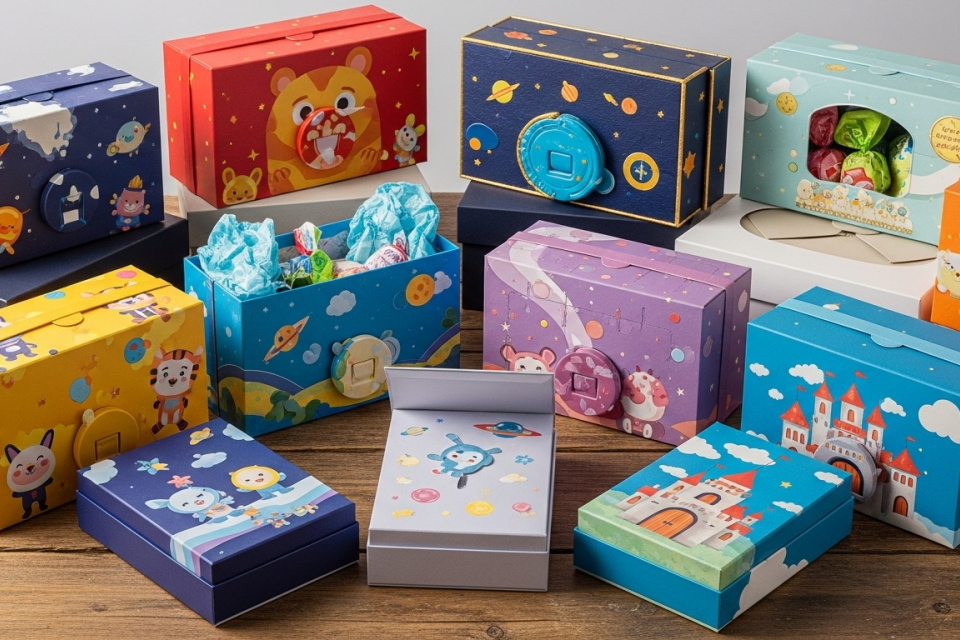
Child-resistant packaging (CRP) is essential for ensuring safety, especially in the context of products that may be hazardous to children. Design standards for CRP are governed by stringent regulations that aim to create packaging that is significantly difficult for children under five years of age to open, while remaining accessible to adults, particularly seniors and those with physical limitations. The packaging must adhere to both the Consumer Product Safety Commission (CPSC) standards in the United States and relevant European standards, which often necessitate a balance between security and usability.
Compliance and Certification
Manufacturers must obtain a general conformity certificate, affirming that their packaging meets the specified testing protocols as outlined in regulations such as 16 CFR § 1700.20 in the US. This certificate requires comprehensive documentation that includes the registrant’s details and testing results, thereby ensuring compliance with safety standards. Importantly, manufacturers are not obligated to retest their packaging unless significant changes have been made that would affect its safety compliance.
Challenges in Design and Implementation
The design and implementation of CRP face several challenges, primarily due to high costs associated with regulatory compliance. The testing and certification processes can be complex and resource-intensive, driving up production costs. Furthermore, manufacturers must continuously adapt to evolving regulations across different jurisdictions, which can lead to additional expenditures for redesign and retesting of packaging.
Innovative Approaches
To meet the rigorous standards for CRP, the industry is exploring innovative approaches, including the acceptance of alternative test methods and the use of advanced materials. This ongoing innovation is crucial not only for compliance but also for enhancing the overall functionality of packaging, ensuring it meets both safety requirements and consumer convenience.
Compliance and Enforcement
Overview of Compliance Requirements
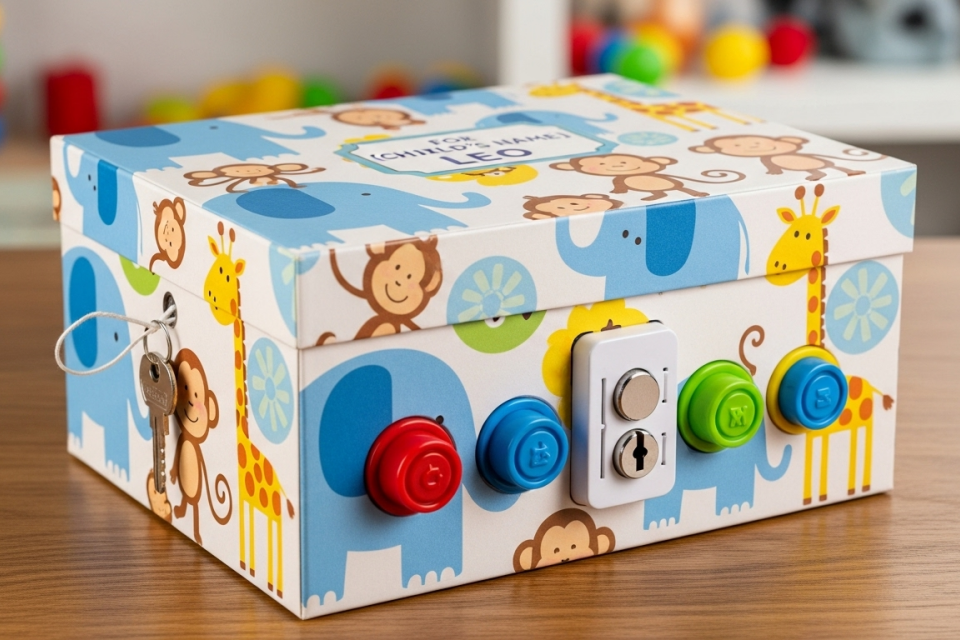
In the United States, compliance with child-resistant packaging regulations is primarily enforced through the Poison Prevention Packaging Act (PPPA). Products must meet two critical criteria: they must pose a significant risk of serious injury or illness to children who may handle or ingest them, and it must be feasible to package them in a child-resistant manner without compromising product quality or usability. Manufacturers, importers, and distributors are responsible for ensuring that their products are fitted with appropriate child-resistant closures.
Regulatory Agencies
The U.S. Consumer Product Safety Commission (CPSC) oversees the enforcement of the PPPA, while the Environmental Protection Agency (EPA) monitors compliance for pesticides under the Child-Resistant Packaging (CRP) regulations. Non-compliance can lead to severe penalties, including heavy fines, product recalls, and litigation, which can significantly damage a business’s reputation and financial standing. The CPSC does not conduct pre-market approval for special packaging; however, they provide guidelines and a list of accredited testing facilities for manufacturers seeking compliance.
Testing Protocols
Testing for child-resistant packaging must adhere to specific protocols outlined in 16 CFR § 1700.20. These tests typically include a child test and an adult test to evaluate the effectiveness of the packaging. Businesses may choose to conduct these tests themselves or engage third-party testing facilities listed by the CPSC. Additionally, any products that began testing during an enforcement discretion period do not need to be retested once that period ends, provided they meet compliance standards set by the CPSC.
State Regulations
Compliance is not only a federal matter; state regulations can vary significantly in specific requirements and penalties for non-compliance. Companies must remain aware of both federal and state-level regulations to avoid potential penalties. The EPA and state authorities perform product audits and inspections to ensure adherence to child-resistant packaging standards and recordkeeping requirements.
Enforcement Actions
In instances of identified non-compliance, the CPSC has the authority to impose penalties, recall products, and mandate compliance actions. These enforcement measures are crucial in maintaining product safety standards. The CPSC emphasizes the importance of accurate documentation and recordkeeping as part of compliance efforts. Manufacturers must retain records for as long as their product registration remains in effect and provide them for inspection upon request.
Challenges and Criticisms
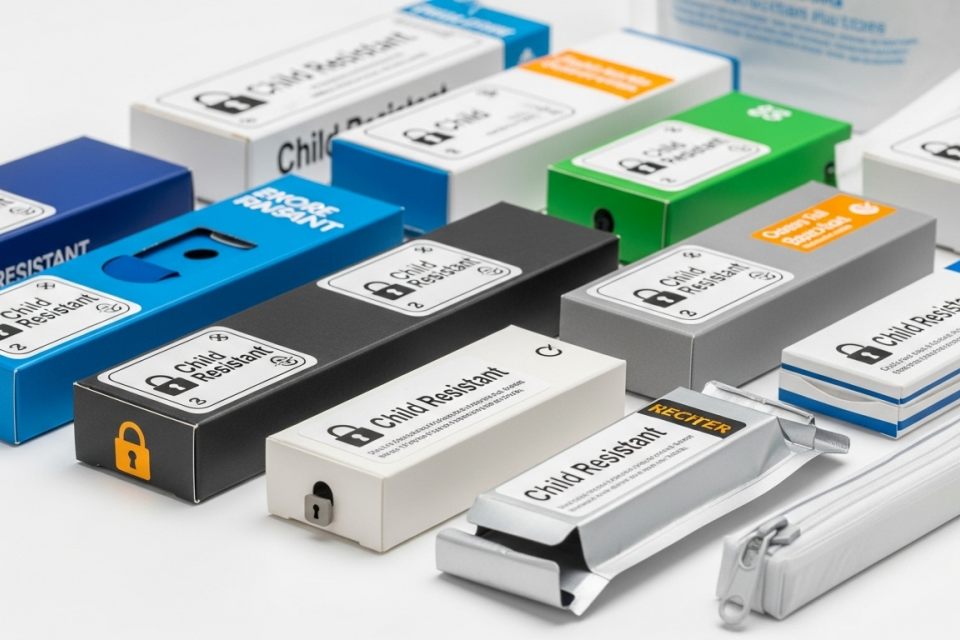
The development and implementation of child-resistant packaging (CRP) face several challenges and criticisms that reflect the need for balance between safety for children and accessibility for adults, particularly seniors.
Balancing Safety and Usability
One of the primary challenges in CRP design is achieving a balance between making packaging sufficiently difficult for children to open while still ensuring that adults, including those with physical disabilities, can access the contents easily. Regulatory bodies, such as the Consumer Product Safety Commission (CPSC), set guidelines requiring that 80% of children cannot open the packaging while 90% of adults without disabilities should be able to do so. This dual requirement often leads to designs that are either overly complex for older adults or not secure enough for young children.
Sustainability Concerns
Another criticism of traditional CRP is its environmental impact. Many CRP designs rely on materials that complicate recycling efforts, as they may require additional plastic components or complex assemblies. As sostenibilità becomes a significant focus in product design, there is a growing demand for mono-material packaging that maintains child resistance while being easier to recycle. However, achieving these goals without compromising safety remains a significant challenge.
Technology Integration
The integration of advanced technologies into CRP also poses challenges. While innovations such as smart sensors can enhance safety by monitoring package access, the costs associated with these technologies may inhibit their widespread adoption. Additionally, there are concerns that such technologies may not always be user-friendly, particularly for seniors or those not comfortable with digital interfaces.
Effectiveness and Consumer Awareness
Despite the advancements in CRP, there remains skepticism about the effectiveness of packaging claims. Many consumers may not fully understand the differences between “child-safe” and “child-resistant” packaging, leading to potential misuse or misunderstanding of safety measures. Clear labeling and consumer education are crucial to address these gaps, yet many regions still lack adequate resources for public awareness campaigns.
Legal and Financial Implications
The consequences of failing to comply with CRP regulations can be severe. High-profile lawsuits, such as the $5 million case against Dr. Reddy’s Laboratories for non-compliance with the Consumer Product Safety Act, highlight the financial risks associated with inadequate child safety measures. This creates pressure on manufacturers to prioritize compliance, but it can also lead to a focus on meeting legal requirements at the expense of genuine safety improvements.
Case Studies
Aptar Pharma’s Child-Resistant Solutions
Aptar Pharma has demonstrated effective compliance with child-resistant (CR) packaging regulations through innovative design and testing processes. The company introduced a CR/Squeeze & Turn (CR/SF) closure technology that aligns with the established principles of consumer goods packaging, which ensures intuitive functionality for adults while preventing unintended access by children. This balance between accessibility for adults and security for children is critical in the design of child-resistant packaging.
Aptar Pharma’s CR/SF solutions underwent rigorous consumer testing, allowing the company to gather valuable insights from end-users. This process helped refine the design before presenting it to regulatory bodies and consumers alike. The product line, based on Aptar’s market-leading pump family, Classic Line, is designed to meet both CR and safety features, thus facilitating compliance with industry standards while enhancing consumer confidence.
Child-Testing Protocols
In line with regulatory requirements, child-resistant packaging must undergo extensive testing with children to ensure effectiveness. The sequential test, which can involve up to 200 children, assesses whether packaging can be successfully opened by a child. The initial test with 50 children determines if further testing is necessary based on the criteria outlined in the testing guidelines. During these trials, if any child is able to access the package’s contents, it constitutes a test failure. Furthermore, criteria for a package to be deemed child-resistant include specific metrics related to the number of individual units accessed during a specified timeframe.
The testing protocols stipulate that testers must monitor the children closely, ensuring minimal distractions while also providing encouragement. The comprehensive nature of these tests, including observations of individual behaviors and methods of opening, supports the reliability of the results and contributes to the regulatory acceptance of new packaging designs.
By adhering to these stringent testing methodologies, manufacturers can substantiate their claims of child-resistant efficacy, thereby meeting both consumer safety needs and regulatory expectations.
Future Trends
The landscape of child-resistant packaging is evolving rapidly, driven by technological advancements, sustainability concerns, and changing regulatory requirements. Innovations in smart technology are paving the way for more effective child-resistant solutions. For instance, biometric features such as fingerprint recognition and sensor-based mechanisms are being integrated into packaging to enhance safety. These sensor-based packages can detect unauthorized attempts by children to access their contents, triggering alarms or notifying caregivers via mobile devices. Although these technologies are still emerging and face challenges related to cost and scalability, they hold significant promise for the future of packaging safety.
In 2024, there is a notable emphasis on sustainable design di packaging that cater to environmental concerns while ensuring child safety. Companies are increasingly adopting recyclable and biodegradable materials, reducing plastic usage without compromising the child-resistant features. An example includes Fresh-Lock®’s innovative recyclable pouch that has significantly decreased plastic consumption by 80% while maintaining safety standards. This shift towards sustainability reflects broader consumer and regulatory demands, encouraging manufacturers to integrate eco-friendly practices into their packaging solutions.
The integration of technology is also reshaping child-resistant packaging designs. Advanced solutions now include smart sensors that monitor package status and alert users when containers are accessed improperly. Digital tools, such as smartphone applications, are being developed to assist consumers in understanding proper usage while enhancing safety information. As these technological capabilities expand, the packaging industry is expected to see a rise in smart packaging features, which will likely become more commonplace.
However, balancing safety with accessibility remains a significant challenge. Packaging that effectively prevents child access can inadvertently complicate usability for elderly individuals or those with dexterity issues. The development of “senior-friendly” child-resistant designs aims to optimize both safety for children and ease of use for adults. Furthermore, manufacturers are exploring visual distraction technologies that could deter children from opening products, although these designs must be carefully evaluated to avoid attracting children instead.
Regulatory evolution also plays a crucial role in shaping the future of child-resistant packaging. As international standards are refined, there is a push for consistent safety outcomes across different product categories. Anticipated changes may incorporate new understandings of child development and user capabilities, addressing the diverse needs of both children and aging populations.
Related Resources
Testing Protocols for Child-Resistant Packaging
Organizations looking to implement child-resistant packaging (CRP) must adhere to specific testing protocols to ensure effectiveness. The Consumer Product Safety Commission (CPSC) outlines a comprehensive testing procedure that includes a senior adult test panel consisting of 100 participants aged 50-70. This panel’s demographics require a distribution of ages, with 25% aged 50-54, another 25% aged 55-59, and 50% aged 60-70, of which at least 70% should be female. The tests involve a five-minute period to open the package followed by a one-minute period to reseal it, with a benchmark of 90% effectiveness required for senior adult use effectiveness (SAUE) to ensure that the packaging is user-friendly yet secure.
Regulatory Guidance for Child-Resistant Packaging
For drug manufacturers, guidance on including CRP statements in product labeling is provided to assist in compliance with the Food and Drug Administration (FDA) requirements. This includes recommendations for both prescription and nonprescription drug products, ensuring that the labeling is informative and standardized across products. It is essential for companies to be aware of both federal and state regulations, as requirements may vary significantly between jurisdictions, impacting the design and marketing of their products.
Market Entry Assistance
Companies seeking to enter the U.S. and EU markets must navigate complex regulatory landscapes. Organizations like SkinConsult offer services to help manufacturers comply with local laws and streamline the regulatory process. They provide insights into regional differences in regulations, assist with the creation of product dossiers, and ensure adherence to safety standards, which are crucial for maintaining consumer trust and brand integrity. By preparing for these challenges proactively, manufacturers can reduce time to market and focus on innovation while remaining compliant with safety standards.