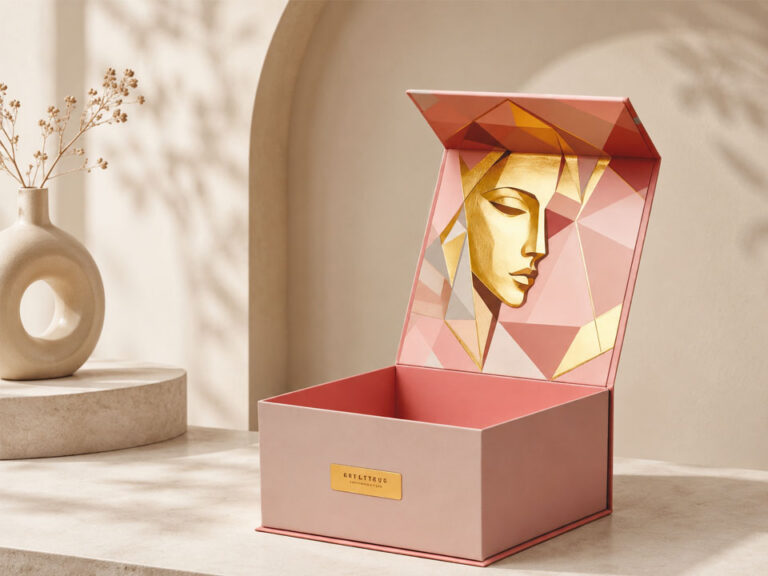
Most packaging content sounds too clean. It pretends every box is a “brand experience,” every material is “premium,” and every buyer is one soft-touch paper away from loyalty. I do not buy that.
Packaging is arithmetic.
If a box does not protect the product, justify its unit cost, strengthen perceived value, survive freight, photograph well, and fit the real buying channel, it is decoration with a purchase order attached. That is why custom rigid boxes deserve a serious look, not because they are fashionable, but because they solve several expensive problems at once.
Think about the iPhone. Apple uses rigid paperboard-style packaging to make the product feel controlled, protected, expensive, and finished before the device is even switched on. I have seen that effect again and again in the market: the box makes the brand stand out as more luxury than competing brands that ship in weaker, noisier, less precise packaging.
But here is the part most suppliers underplay. Rigid setup boxes are more expensive than folding cartons and printed corrugated boxes. That is the first reason most brands do not use rigid paperboard boxes as their main product packaging. But with the development of automatic rigid box machines, the labor-cost gap is shrinking, and the unit price of rigid boxes is becoming more defensible for brands that care about margin, repeat purchase, and premium positioning.
So what are the top 10 advantages of custom rigid boxes? Let’s get specific.
The Data Behind the Rigid Box Argument
Before we talk about texture, magnets, paperboard thickness, and unboxing psychology, look at the numbers.
The National Retail Federation reported on December 5, 2024, that U.S. retail returns were projected to hit $890 billion in 2024, equal to 16.9% of annual sales. That is not a side issue; it is margin leakage at industrial scale.
DHL’s 2025 delivery and returns research says 73% of global shoppers will not buy from an online retailer if they do not trust the delivery provider. In ecommerce, the box is part of that trust chain, especially for fragile, giftable, expensive, or visually judged products.
Apple’s own 2024 iPhone 16 and iPhone 16 Plus environmental report says the packaging is 100% fiber-based, contains 64% or more recycled content in fiber packaging, and was redesigned to be 8% smaller by volume than the iPhone 15 and iPhone 15 Plus boxes. That is not just sustainability language. It is packaging engineering tied to pallet efficiency, material control, and brand consistency.
And Reuters reported on August 13, 2025, that Amazon cut shipments using single-use plastic packaging by 16%, down to 74,137 metric tons, while pushing paper-based packaging because customers find paper easier to recycle and because paper can protect products better in certain applications.
The point is simple: packaging is no longer a back-office purchasing decision. It is tied to returns, customer trust, freight efficiency, sustainability claims, and perceived value.
Rigid Boxes vs Folding Cartons vs Corrugated Boxes
| Packaging Type | Typical Strength | Visual Premium Feel | Ecommerce Suitability | Unit Cost | Best Use Case |
|---|---|---|---|---|---|
| Custom rigid boxes | High | Very high | Strong when paired with inserts or mailers | Higher | Luxury, electronics, jewelry, cosmetics, gifts |
| Folding cartons | Medium | Medium | Limited without outer protection | Lower | Retail shelf products, lightweight goods |
| Printed corrugated boxes | High for shipping | Medium | Strong | Medium | DTC shipping, subscriptions, bulkier products |
| Flexible pouches | Low to medium | Low to medium | Product-dependent | Low | Food, refills, lightweight consumables |
Rigid boxes are not always the cheapest option. They are not supposed to be. Their job is to protect the product, increase perceived value, and make the customer feel that the item deserves a higher price.
That costs money.
But if a $2.20 rigid box helps protect a $79 skincare set, a $149 watch, a $299 hair tool, or a $999 device, the packaging cost should be judged against gross margin, return risk, customer lifetime value, and resale presentation, not only against the procurement manager’s cheapest carton quote. Isn’t that the more honest calculation?
1. Custom Rigid Boxes Create Immediate Premium Perception
The first advantage of custom rigid boxes is perceived value. A rigid box feels different in the hand because it has density, resistance, and structure. Buyers notice that before they read the brand story.
This is why luxury brands, electronics brands, jewelry brands, and high-end cosmetics companies keep using rigid packaging even when cheaper formats exist. A weak carton says, “This product was packed.” A rigid box says, “This product was presented.”
The iPhone example matters here. I have handled plenty of smartphone packaging, and Apple’s rigid box format still communicates more control and luxury than many competing brands. The box does not scream. It does not need to. Its weight, lid tolerance, clean graphics, and slow reveal do the work.
That is one of the clearest benefits of rigid packaging: it makes the product feel more valuable before the product is used.
2. Rigid Packaging Protects High-Margin Products Better
Rigid paperboard boxes resist crushing, bending, corner collapse, and surface distortion better than standard folding cartons. That matters when the product has a high retail price, fragile surfaces, glass components, molded trays, bottles, electronics, or gift positioning.
For ecommerce, the custom rigid box benefits for ecommerce are especially practical. The box gives the product a stable primary structure before it enters the shipping carton, mailer, or fulfillment system. When paired with EVA foam, molded pulp, paperboard inserts, or corrugated dividers, rigid boxes can reduce movement inside the package.
This is where many brands make a mistake. They think ecommerce protection is only about the outer shipper. It is not. The internal retail box must also stabilize the product, absorb handling pressure, and survive warehouse compression.
Returns are already expensive. NRF’s 2024 figure of $890 billion in projected retail returns should make every ecommerce brand ask whether saving a few cents on primary packaging is really saving money.
3. Custom Rigid Packaging Helps Luxury Products Justify Higher Prices
Why use custom rigid boxes for luxury products? Because luxury selling depends on controlled signals.
The material must feel intentional. The opening must feel slow enough to build anticipation. The inside fit must look engineered, not improvised. The surface printing must be clean. The structure must not warp after transit.
This is where formats such as custom magnetic closure boxes earn their place. A magnetic rigid box gives the customer a clean open-close action, which makes it useful for cosmetics sets, jewelry, electronics accessories, influencer kits, and VIP gift packaging.
The box becomes part of the product’s memory. That is not soft marketing talk; it is how premium categories train buyers to associate structure with value.
4. Rigid Boxes Improve the Unboxing Experience Without Needing Gimmicks
A good unboxing experience is not about confetti, ribbons, and overbuilt inserts. Most of that is waste. A better approach is sequence.
The lid lifts. The product appears. The insert holds everything in position. The accessories are revealed in order. The customer knows where to look.
That is why rigid boxes work well for electronics, watches, perfumes, candles, skincare kits, and luxury apparel accessories. They let the brand design a reveal, not merely a container.
For classic premium presentation, lid lift-off rigid boxes are still one of the cleanest formats. They are simple, recognizable, and easy to adapt with foil stamping, embossing, debossing, spot UV, textured paper, or soft-touch lamination.
Simple wins.
5. Custom Rigid Boxes Strengthen Shelf Impact and Product Photography
In retail, the box must sell at a distance. In ecommerce, it must sell through images and short-form video.
Rigid box packaging advantages show up clearly in photography because flat panels, sharp corners, thick walls, and clean edges make the product look more expensive online. This is especially important for Amazon listings, Shopify stores, TikTok Shop, Instagram Reels, and luxury DTC landing pages.
A folding carton often looks thin in lifestyle photography. A rigid box can stand upright, stay square, hold accessories in place, and give creators a better object to film.
That matters because packaging now lives beyond the warehouse. It appears in customer review photos, influencer videos, unboxing clips, marketplace images, and post-purchase content.
6. Rigid Packaging Supports Better Insert Systems
A rigid box is only as good as the inside architecture. Inserts are where a premium box becomes a protective system.
Common insert options include:
- Molded pulp inserts for fiber-based positioning
- Paperboard dividers for lighter products
- EVA foam for electronics, tools, and fragile goods
- Sponge or velvet-lined inserts for jewelry and watches
- Corrugated inserts for heavier ecommerce sets
The advantage of custom rigid packaging solutions is that the insert, lid height, base depth, wall thickness, and product reveal can be engineered together. That is hard to do well with a thin folding carton.
For drawer-style presentation, paper drawer boxes are especially effective because they create a controlled sliding reveal. They work well for jewelry, cosmetics, accessories, stationery, tech products, and premium gift sets.
7. Rigid Boxes Can Reduce Brand Damage From Bad Delivery Experiences
A damaged package does not only create a return. It creates suspicion.
The customer starts asking whether the brand is careless, whether the item is authentic, whether the product was previously returned, or whether the seller cut corners. Once that thought starts, customer service has already lost ground.
DHL’s 2025 data showing that 73% of global shoppers will not buy from an online retailer if they do not trust the delivery provider should be read broadly. Trust is not only about the carrier logo. It is about the entire delivery experience: box condition, tamper evidence, product stability, opening feel, and whether the item arrives looking new.
For higher-value ecommerce products, rigid boxes help brands protect the psychological condition of the order, not only the physical product.
8. Custom Rigid Boxes Make Sustainability Claims More Visible
Sustainability in packaging is no longer just about using brown kraft paper and saying “eco-friendly.” Serious buyers want evidence: recycled content, fiber sourcing, plastic reduction, right-sized design, recyclability, and lower material waste.
McKinsey’s 2025 global consumer packaging research found that every geography surveyed had a group of consumers willing to pay more for sustainable packaging, with willingness varying by country and demographic group.
Rigid boxes can support those claims when they are designed properly: FSC paper, recycled greyboard, soy-based inks, molded pulp inserts, plastic-free closures, paper wraps, and optimized dimensions.
Apple’s iPhone 16 packaging is a useful benchmark because the company reports 100% fiber-based packaging, 64% or more recycled content in fiber packaging, and an 8% smaller box volume versus the prior iPhone 15 packaging. This is the direction serious packaging teams are moving: premium structure, less plastic, tighter sizing, and better freight efficiency.
9. Rigid Boxes Offer More Finishing Options for Brand Differentiation
A rigid box gives designers more surface authority. The board is thicker. The panels are flatter. The structure can carry higher-end finishing without looking forced.
Popular finishing options include:
- Hot foil stamping
- Embossing
- Debossing
- Spot UV
- Matte lamination
- Soft-touch lamination
- Textured specialty paper
- Metallic paper wraps
- Ribbon pulls
- Magnetic closures
- Custom sleeves
- Internal printing
This is why rigid boxes are so common in luxury gift packaging. A two-piece rigid box can look understated with a blind debossed logo, or it can look retail-heavy with full-color printing and foil. The structure gives the brand room to choose.
But restraint matters. Over-finishing can make a box look cheap, especially when metallic foil, gloss, ribbon, and loud color are stacked without discipline.
10. Automation Is Making Rigid Boxes More Competitive
Here is my controversial industry opinion: rigid boxes lost many projects not because they were wrong for the product, but because the old labor model made them too expensive.
Traditional rigid box production required more handwork than folding cartons. Setup, wrapping, positioning, corner forming, gluing, and inspection could push unit costs beyond what many brands would accept. That is why folding cartons and printed corrugated boxes became the default for many mid-market products.
But automatic rigid box machines have changed the cost conversation. They can reduce labor intensity, improve consistency, increase output, and lower unit price at scale. The economics are still not the same as folding cartons, and nobody serious should pretend otherwise. But for brands ordering at meaningful volume, the gap is no longer as punishing as it used to be.
This is where procurement needs to mature. Do not ask only, “What is the cheapest box?” Ask, “Which packaging format protects the product, supports the brand, fits fulfillment, and improves the customer’s first physical contact with us?”
When Custom Rigid Boxes Are Worth the Cost
Custom rigid boxes are worth the cost when the product has enough margin, enough fragility, enough gift value, or enough brand ambition to justify stronger packaging. They are usually overkill for low-margin consumables but highly defensible for premium goods, kits, electronics, jewelry, cosmetics, and DTC products where presentation drives trust.
| Product Category | Rigid Box Fit | Why It Works |
|---|---|---|
| Smartphones and electronics | Excellent | Protection, precision, premium reveal |
| Jewelry and watches | Excellent | Gift value, insert control, luxury signal |
| Cosmetics and skincare sets | Very strong | Shelf appeal, influencer content, kit organization |
| Candles and fragrance | Strong | Fragile product protection, premium feel |
| Apparel basics | Weak | Usually too expensive unless gift or luxury positioning |
| Subscription boxes | Mixed | Works for premium kits, not low-margin replenishment |
| Food products | Selective | Good for luxury confectionery, poor for basic grocery |
| Corporate gifts | Excellent | Presentation and retention value |
The real question is not whether rigid boxes are expensive. They are. The real question is whether cheap packaging is quietly costing more through damaged goods, weaker perceived value, lower repeat purchase, and poor content performance.
How to Choose the Right Rigid Box Structure
Choose the structure based on the product’s weight, opening sequence, retail channel, and customer expectation. A heavy product needs stronger board and insert support. A gift product needs a better reveal. An ecommerce product needs compression resistance and stable internal positioning.
Magnetic Closure Boxes
Use magnetic closure boxes when the product benefits from reusability, repeated opening, or a VIP presentation. They work well for beauty kits, launch kits, electronics accessories, promotional gifts, and luxury retail sets.
Lid Lift-Off Boxes
Use lid lift-off boxes when the brand wants a clean, classic luxury look. This format works well for electronics, perfume, watches, jewelry, candles, and premium stationery.
Two-Piece Boxes
Use two-piece boxes when you want a traditional premium structure with strong retail familiarity. They are versatile, scalable, and easy to customize with inserts, wraps, and finishes.
Paper Drawer Boxes
Use paper drawer boxes when the reveal matters. The sliding motion gives the customer a slower opening moment and works especially well for jewelry, cosmetics, small electronics, and gift products.
FAQs
What are custom rigid boxes?
Custom rigid boxes are premium paperboard packaging structures made from thick greyboard or chipboard, wrapped with printed or specialty paper, and customized by size, finish, insert, opening style, and branding to protect and present products with a higher-value appearance than folding cartons or basic corrugated packaging.
They are often called setup boxes because they are delivered pre-formed rather than flat-packed like folding cartons. Brands use them for luxury goods, electronics, jewelry, cosmetics, gift sets, and ecommerce products where presentation and protection matter.
What are the top 10 advantages of custom rigid boxes?
The top 10 advantages of custom rigid boxes are premium perception, stronger protection, luxury price support, better unboxing, stronger photography, improved insert systems, better delivery trust, visible sustainability options, advanced finishing choices, and increasingly competitive pricing through automated production.
In practical terms, custom rigid boxes help brands sell the product before the customer touches it. They also reduce the visual and structural weaknesses that often appear with thin cartons, especially for high-margin products.
Why use custom rigid boxes for luxury products?
Custom rigid boxes are used for luxury products because they create a controlled, high-value physical experience through thickness, clean edges, structured opening, premium finishes, and precise inserts that help the customer believe the product deserves a higher price before it is even used.
Luxury buyers judge details. A rigid box gives brands more control over weight, sound, friction, reveal, surface texture, and product placement. Those details are difficult to reproduce with low-cost folding cartons.
Are custom rigid boxes good for ecommerce?
Custom rigid boxes are good for ecommerce when the product is fragile, premium, giftable, or high-margin, because they add internal structure, improve presentation after transit, support inserts, and help the delivered item arrive with stronger perceived value than products packed only in thin retail cartons.
They should still be tested with the outer shipping carton, drop conditions, product weight, and warehouse handling. A rigid box is not a magic shield. It is one strong part of a complete ecommerce packaging system.
Are rigid boxes more expensive than folding cartons?
Rigid boxes are more expensive than folding cartons because they use thicker board, more material, more complex forming, paper wrapping, and often more labor or machine time, but automation has reduced some of the labor cost and made rigid packaging more realistic for larger-volume brands.
The correct comparison is not only unit price. Brands should compare product value, return risk, damage rate, shelf impact, unboxing content, repeat purchase, and customer perception before deciding that folding cartons are automatically better.
What products should use custom rigid packaging solutions?
Products that should use custom rigid packaging solutions include electronics, jewelry, watches, cosmetics, skincare sets, fragrance, candles, premium confectionery, corporate gifts, launch kits, and luxury accessories because these categories benefit from stronger protection, better inserts, higher perceived value, and a more controlled opening experience.
Low-margin commodities usually do not need rigid boxes. The format makes the most sense when the box can defend margin, improve trust, or become part of the product’s premium identity.
Your Next Steps
If you are choosing between folding cartons, printed corrugated boxes, and custom rigid boxes, do not start with the cheapest quote. Start with the product.
Ask five questions:
- What is the product’s retail price and gross margin?
- How much damage, return, or complaint risk exists in shipping?
- Does the customer expect a giftable or premium presentation?
- Will the packaging appear in ecommerce photos, reviews, or social content?
- Can automation or larger production volume reduce the rigid box unit cost?
If the answer points toward premium positioning, fragile handling, higher margins, or stronger brand presentation, custom rigid boxes are not cosmetic packaging. They are commercial packaging.
For brands that want to test custom rigid packaging solutions, compare magnetic closure boxes, lid lift-off boxes, two-piece boxes, and paper drawer boxes against the product’s weight, opening sequence, ecommerce channel, and target price point. Then prototype before mass production.
A rigid box should not merely look expensive. It should earn its cost.